About Mandala Yoga
"Each person's life is like a mandala – a vast, limitless circle. We stand in the centre of our own circle and everything we see, hear and think forms the mandala of our life."
— Pema Chödrön
What is a Mandala?
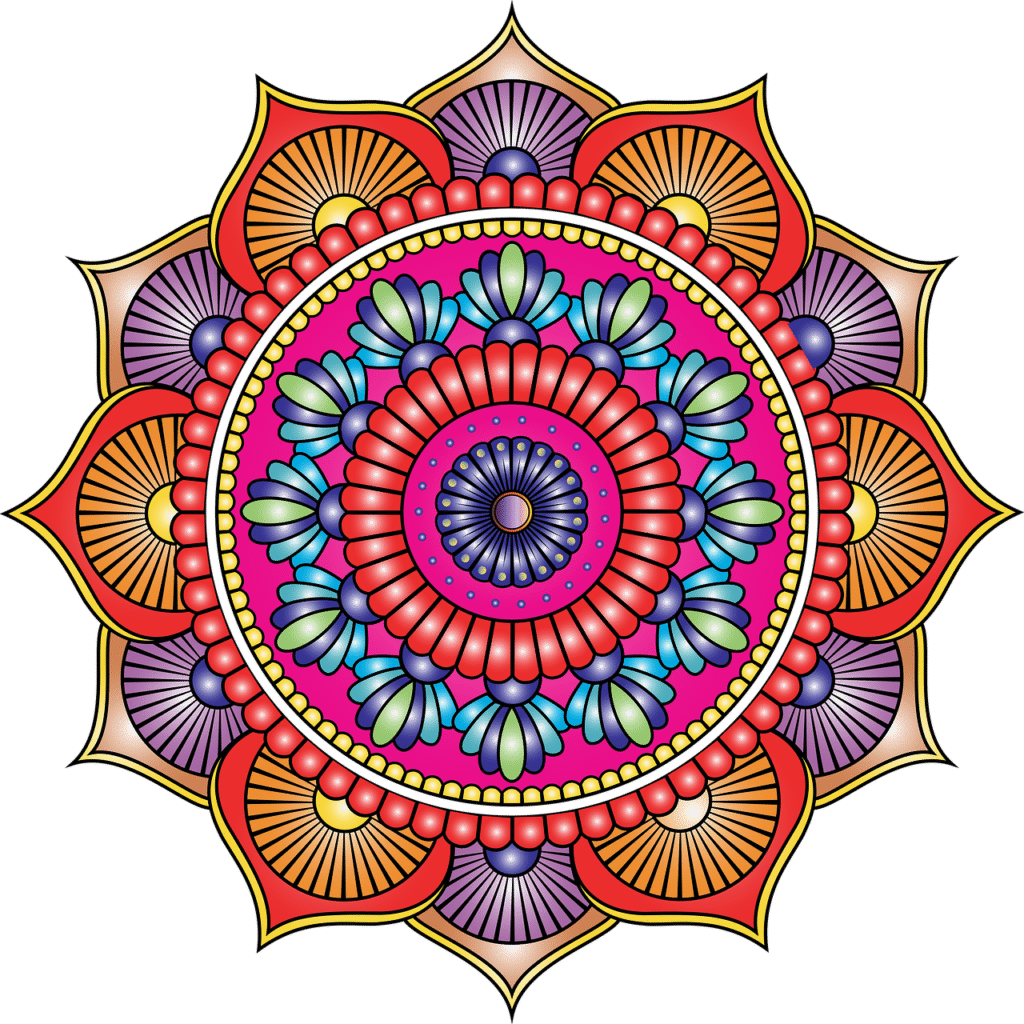
Pronounced MAHN-Dahl-Ah, the word Mandala means “healing or sacred circle” in Sanskrit (मण्डल). Mandalas are circular, geometric designs that represent “wholeness” and “completeness”. The pattern of the mandala circle is balanced and in harmony. The sacred space within the circle is said to be a harbour for an inner truth.
The word ‘mandala’ entered the English language in the second half of the 1800s and had the meaning of ‘magic’ circle. It is an ancient representation of the great cosmos… as the yogis like to say ‘The Universe’.
Mandalas appear in many forms and in many aspects of our daily life.
The Circle
The circle is one of humanity’s oldest symbols. We are surrounded by circular celestial bodies such as the sun, the moon, and the earth. In nature, we watch flowers unfold their petals enclosing their centre. The iris of our eyes are physical circles through which we experience the visual world.
We also speak of conceptual circles – circles of friends, family, and community. The circle represents unity, wholeness, and the eternal cycle of life.
Mandalas in Culture, History & Religion
Universal Symbol
Found across cultures from Buddhism to Hinduism, Aboriginals to Mayans. In Hindu and Buddhist thought, the mandala is the symbol of the universe and how we are all connected.
Cultural Expressions
Circular Aztec calendar, Taoist yin yang symbol, Celtic spiral – mandalas appear in countless cultural and religious traditions.
Architecture
Cosmati pavements at Westminster Abbey, the 9th-century Indonesian Buddhist temple Borobudur, and the rose stained glass of Chartres cathedral all follow mandala patterns.
Making of Mandalas
As Mandalas symbolise unity and harmony, their form often exhibits radial balance. Most designs offer balancing visual elements starting with a central dot that moves outward. The basic form of most mandalas is a square with four gates containing a circle with a center point. Each gate is in the general shape of a T.
Often they feature brightly coloured geometric designs. Even though a mandala may be dominated by squares or triangles, the mandala has a concentric structure. The meanings of individual mandalas is usually different and unique to each mandala.
Mandalas & Meditation
Focus
Stillness
Chattering thoughts may cease as you contemplate the design
Balance
Healing
Steps to Meditating with a Mandala
- Choose a Mandala that appeals to you or its meaning resonates with you
- Set an intention before focusing on it
- Once you have set your intention, begin to focus on the mandala
- Let your eyes take in the beauty of the designs, allowing your mind to wander as it will
- Get inside the mandala. Let it absorb all of your attention
- As you fall into the mandala, you will begin to feel lighter, and intuitive thoughts may arise
The Mandala, Psychotherapy & Carl Jung
The Circle in Psychology
The circle as a container or ‘organisation vehicle’ is well known in psychotherapy. The circle as an organising principle is a natural occurrence in the child’s learning process – a young child will progress early from scribbling to drawing circles.
It is through the experience of drawing mandalas that we apply an order to our personal psychology. The mandala allows us to find our own centre, to process old and new information and connect with our personal identity as we continue around the cycle of personal growth.
Therapeutic Benefits
The mandala is proven to provide additional therapeutic benefits, including stress relief and relaxation. We are surrounded by circular celestial bodies such as the sun, the moon, the earth which radiate circular rays of light.
In nature we watch flowers unfold their petals enclosing their centre. The iris of our eyes are physical circles through which we experience the visual world. Then we have the conceptual circles that we talk about – such as circles of friends, family, community.
Carl Jung's Work with Mandalas
In his pioneering exploration of the unconscious through his own art making, Jung observed the motif of the circle spontaneously appearing. The circle drawings reflected his inner state at that moment.
Jung was familiar with the philosophical writings of India (the term mandala appears in the Rigveda and Vedic rituals use Mandalas such as Navagraha mandala right up today). This prompted him to adopt the word “mandala” to describe these circle drawings that he and his patients made.
Jung’s research was built upon his belief that if an individual was able to understand their own psychology of self, they would be able to create ‘order’ within their inner world. With this order in place, they would be prevented from becoming lost in their own mind or overwhelmed by modern life.
Jung recognised that the urge to make mandalas emerges during moments of intense personal growth. Their appearance indicates that a profound re-balancing process is underway in the psyche. The result of the process is a more complex and better integrated personality.
Our Teaching Team
Om wahe guru!
For Beginners
For New Teachers
For Experienced Teachers






Guest Teachers
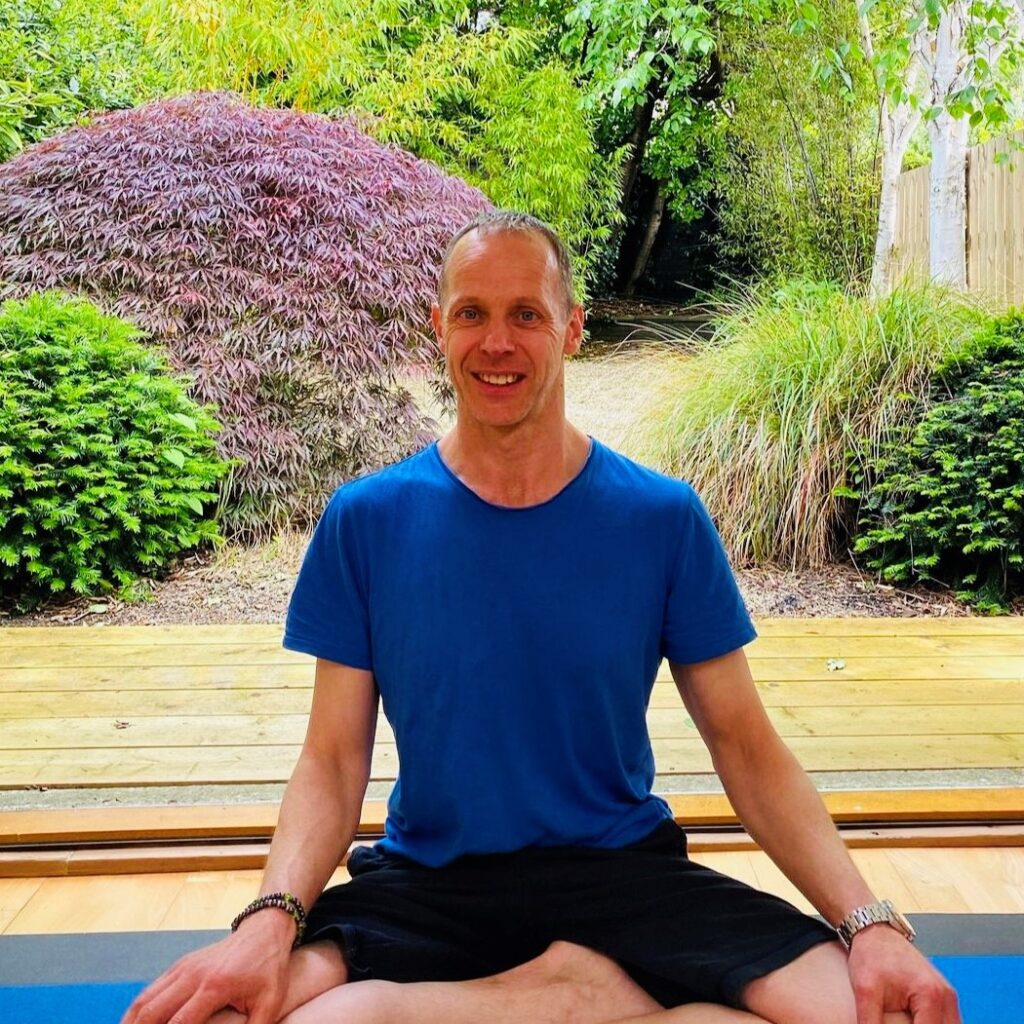
We love to have guest teachers come teach and practice with us.
Enjoy your first class FREE!
Your first class with us is free when you sign up to our twice-monthly Mandala News updates.
Your complimentary pass excludes prenatal and handstand classes and workshops and retreats.